


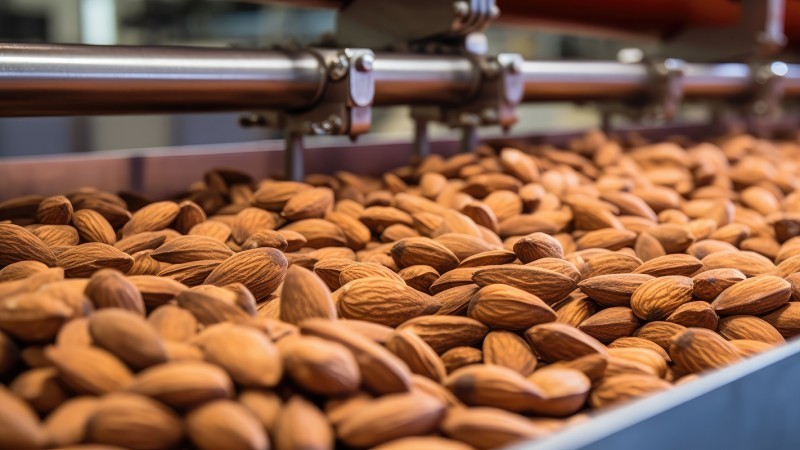
Application scenarios: High-speed sorting of unpackaged nut raw materials (such as walnuts, macadamia nuts, sunflower seeds, pistachios, pine nuts, etc.) upon arrival at the factory or before roasting.
Key pain points:
Highly toxic impurities of similar density: The density of gravel and hard mud in the field is almost identical to that of nut shells. If these are missed during detection, it can easily lead to high-value customer complaints and claims from consumers who feel like they are "breaking their teeth".
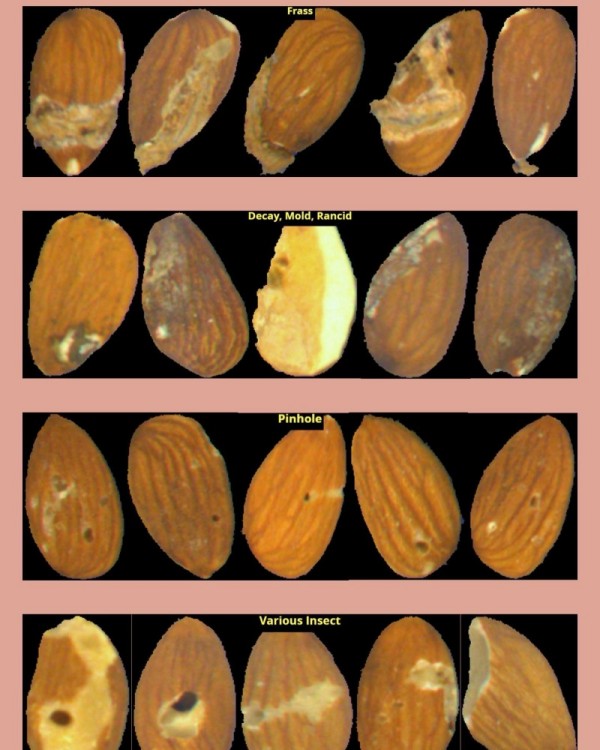
Internal and external biological defects: hidden insect holes and small mold spots on the surface, as well as "empty shells" or "shriveled fruits" that look intact but have no kernel inside.
Recommended model

Detection items (dual-core driven, precise rejection):
X-ray inspection - Specializing in high-density foreign objects: Utilizing a large-channel high-speed X-ray detector, the system can collect and generate grayscale images based on the different penetration rates of X-rays, thoroughly penetrating the nut shell and accurately distinguishing between "organic kernels" and "inorganic impurities (metals/ceramics/stones/mud/glass)".

Vision inspection - Specializing in wormholes and empty/rotten nuts: High-definition industrial cameras equipped with deep learning AI algorithms accurately capture tiny "wormholes," "mold spots," and discolored defects on the surface of nuts; at the same time, combined with multi-dimensional morphological features, they intelligently identify and remove "empty shells" and "shriveled nuts" with abnormal weight distribution.
Microsecond-level precision rejection: After defective products are detected, the high-speed multi-channel air valve at the end of the belt uses high-pressure airflow to precisely "blow" foreign objects and bad products into the waste trough, minimizing the loss of good materials.
