Packaging Form:Bottled and canned

Application scenario: Premium staple food for cats and dogs (plastic bottles, tinplate cans, or aluminum cans).
Key technical pain points :
For bottled and canned pet food, direct manual inspection of internal quality is impossible after sealing, making it difficult for traditional random sampling methods to guarantee the safety of every individual unit.
Bottled and canned pet food is typically produced on high-speed automated filling lines; factors such as product viscosity, the condition of filling equipment, and production speed can lead to issues like under-filling or overweighting.
The production process involves multiple stages—including filling, capping, and sterilization—during which defects such as incomplete sealing, deformed lids, sealing anomalies, misaligned labels, or missing batch codes may occur.
Recommended model


Intelligent testing projects:
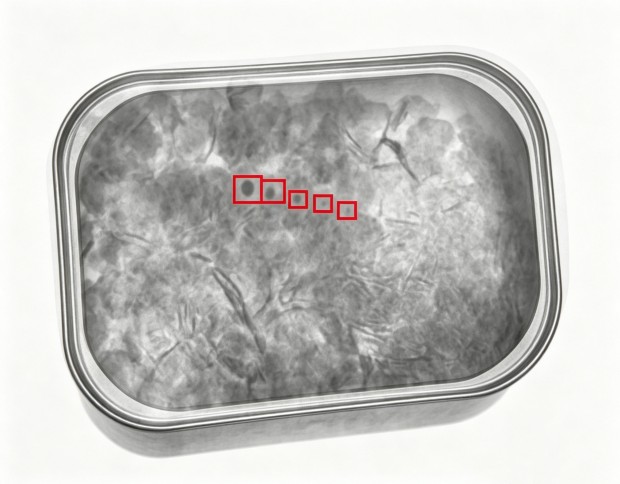
Side-illuminated X-ray inspection machine: HISTOM side-illuminated X-ray technology intelligently identifies and shields the metal material interference of the tin can itself, directly sees through the meat inside, and accurately identifies foreign objects such as animal bone fragments, fish bones, metal needles and glass shards.
The dynamic checkweigher performs in-line weight inspection on individual bottles or cans of pet food, automatically identifies products with abnormal weights based on preset standards, and removes non-conforming items using an automatic rejection mechanism.