From Spot Checks to Full Inspections: AI Visual Inspection Empowers Factories to Upgrade Quality
Manufacturing managers are well aware that quality management is not a matter where "close enough" will suffice. Under traditional manual sampling methods, inspectors examine thousands of products daily; visual fatigue and the inertia of repetitive tasks make it all too easy to overlook defects. A single missed defect could reach the customer, triggering complaints, returns, or even damage to the brand's reputation—at which point, attempting to trace the issue is already too late.
The limitations of traditional random sampling are becoming increasingly apparent.
batch if they pass. This approach was adequate in an era of low production volumes and lenient standards. However, in today’s landscape—characterized by accelerated production lines, surging orders, and increasingly stringent quality requirements—the coverage rate of spot checks has steadily declined. Consequently, vast quantities of untested finished goods leave the factory, creating quality risks that could erupt at any moment. Meanwhile, manual quality inspection suffers from significant drawbacks: labor shortages are acute, as young workers shun repetitive tasks; skilled inspectors leave frequently; and inconsistent judgment criteria among personnel lead to noticeable fluctuations in inspection quality across different shifts on the same production line. As one packaging company executive bluntly put it: "With manual visual inspection, ten people might yield ten different results."
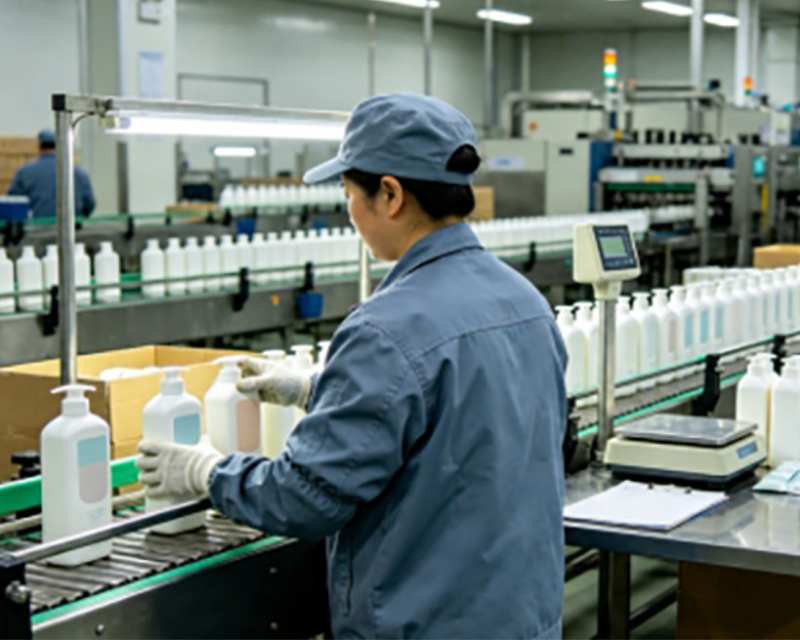
The direction for 100% inspection is clear, but manual implementation is difficult.
An increasing number of enterprises recognize that true quality control requires a shift toward 100% inspection—checking every single unit and maintaining oversight throughout the entire process. However, manual 100% inspection faces practical constraints: high-speed production lines churn out hundreds of units per minute, necessitating a massive increase in quality inspectors and driving up labor costs. Even with sufficient staffing, human attention spans are limited; inspection accuracy inevitably declines during continuous operation, significantly compromising the effectiveness of the process. While the move toward 100% inspection is the right direction, implementation requires a change in approach: replacing human eyes with machines and replacing human experience with algorithms.
AI Visual Inspection: Empowering Equipment with Perception and Judgment Capabilities
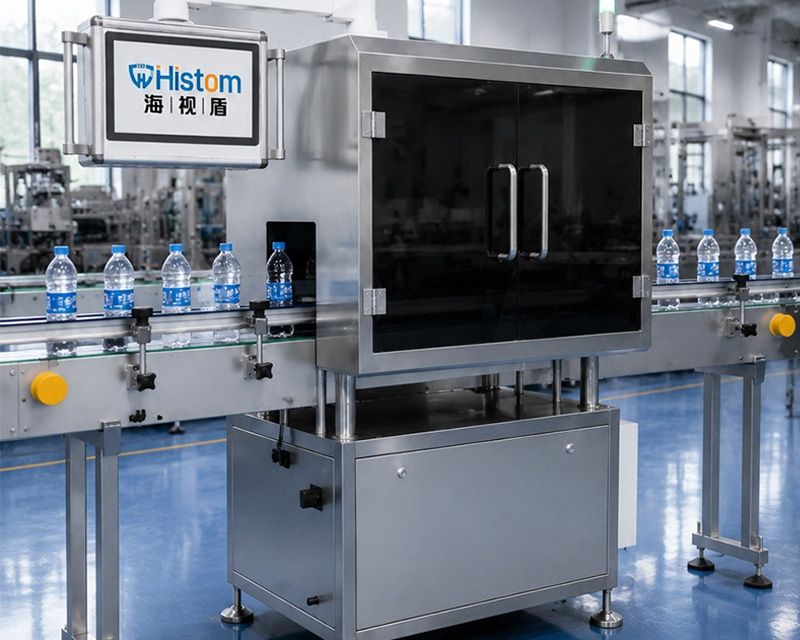
The core value of AI visual inspection equipment lies in its dual-component system: high-speed industrial cameras act as the "eyes," capturing detailed images of every product at high speed, while deep learning algorithms serve as the "brain." Trained on vast datasets of both defect-free and defective samples, these algorithms accurately identify various flaws—such as scratches, printing misalignments, abnormal liquid levels, foreign contaminants, and missing codes. Operating continuously 24/7 in sync with the production line, the equipment performs 100% inspection and triggers immediate rejection of defective items, ensuring that no substandard products proceed to the next stage of the process.
Histom AI Algorithms: Higher Precision, Stronger Adaptability
Histom possesses proprietary core technology in the field of AI-based visual inspection. Its R&D team deeply integrates deep learning with industrial applications, training specialized inspection models tailored to the specific needs of various industries. Traditional visual inspection relies on manually defined rules and parameter thresholds, making it difficult to balance accuracy and robustness when dealing with complex textures, lighting variations, or product changeovers.
Histom’s AI algorithms utilize deep learning, training on vast datasets from actual production lines to autonomously establish models that distinguish between acceptable and defective products; this results in inspection precision and environmental adaptability that significantly outperform traditional solutions. In practical application, the system adapts automatically, eliminating the need for parameter recalibration during product changeovers. It reliably detects even subtle defects—such as foreign objects inside transparent packaging or faint scratches on dark backgrounds—while maintaining inspection standards that are consistent, stable, and reproducible, unaffected by shift changes.
Moving from Defect Interception to Prevention at the Source
he value of AI inspection equipment extends far beyond merely replacing manual sorting. While identifying defective items, the system comprehensively records inspection data—such as defect type, location, timing, and frequency—to create a "health monitoring profile" of the production line. Managers can analyze this data to trace defects back to their root causes—whether they stem from raw material batch fluctuations, the need for equipment maintenance, or process parameters deviating from optimal ranges. Eliminating issues at the source is far more cost-effective and thorough than relying on end-of-line screening. This shift in the quality inspection role—from reactive "gatekeeping" to proactive prevention—represents the fundamental goal of quality management.
Conclusion
The shift from spot checks to 100% inspection represents not merely an evolution in testing methods, but a systemic upgrade of a factory's quality management philosophy. The maturation of AI-based visual inspection technology has transformed 100% inspection from an ideal into a practical, implementable reality. Rather than passively dealing with customer complaints and product returns, manufacturing enterprises should proactively establish inspection safeguards to intercept quality risks before products leave the factory. Histom specializes in providing practical, deployable AI visual inspection solutions, ensuring that every product can withstand the market's rigorous scrutiny.
Let's Customized Your Inspection Solution
Every production line is unique. Our experts will help you design a vision inspection system tailored to your products, packaging formats, and quality requirements.


