Does Vacuum Packaging Affect Food Metal Detection?
In the food industry, vacuum packaging is widely used to extend shelf life and maintain product quality. It is commonly applied to items such as meat, seafood, vegetables, and prepared foods.
However, some food manufacturers are concerned that vacuum sealing might interfere with metal detection. Does removing air from the packaging truly compromise detection accuracy? Or are the inherent characteristics of the food and the choice of packaging materials the actual reasons for challenges in the detection process?
In most applications, the vacuum state itself is not the primary factor affecting metal detection; rather, the characteristics of the food, the packaging materials, and the dimensions of the product are the more critical factors.

Does vacuum packaging affect metal detection?
While vacuum packaging equipment removes air from the package, this process does not directly interfere with the electromagnetic field of a metal detector.
Challenges to the sensitivity of a metal detector typically stem from the following three factors:
1. Moisture and salt content of the food
Meat and seafood naturally contain moisture. Products with high salt content—such as seasoned meat products, sausages, and ready-made meals—can generate electrical signals during the inspection process. This phenomenon, known as the "product effect," may interfere with the detection of tiny metal contaminants.
2. Packaging materials
Standard plastic vacuum bags generally do not cause interference in the way that metal packaging might. However, aluminum foil or metallized films can affect conventional metal detection, potentially requiring an alternative inspection approach.
3. Product dimensions and thickness
The size of the package and the thickness of the product can influence inspection conditions. The dimensions of the inspection aperture (opening) should be selected based on the actual package size and specific production requirements.
Understanding these factors helps manufacturers pinpoint the true cause of any inspection issues, rather than simply attributing the problem to the vacuum packaging itself.
Metal Detector for Meat: What Should Manufacturers Consider?
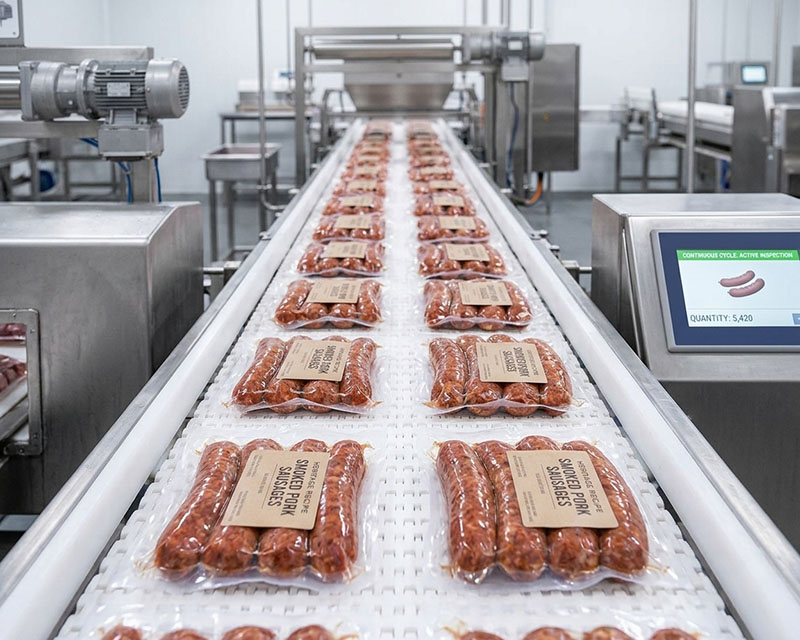
Meat products—such as vacuum-packed steaks, chicken breasts, sausages, and jerky—can pose challenges for metal detection due to their high moisture and salt content.
When selecting metal detection equipment for meat products, the specific model chosen should be tailored to the product's characteristics and its packaging format.
By automatically identifying product properties and employing phase-tracking technology, the detection equipment can adapt to varying product signals during operation. Nevertheless, the actual detection performance must always be verified using representative products and calibrated metal test samples.
Metal Detectors for the Seafood Industry
Seafood products require rigorous inspection after being packaged. Common applications include:
● Vacuum-packed salmon fillets
● Cod fillets
● Grilled eel (unagi)
● Other frozen seafood products
Factors such as moisture content, salt levels, temperature, and product consistency can affect inspection performance. Consequently, inspection equipment must utilize advanced digital signal processing technology and feature an automatic "product effect" learning function. Since the inherent characteristics of seafood—the "product effect"—can interfere with detection, this technology mitigates such effects to ensure optimal inspection results.
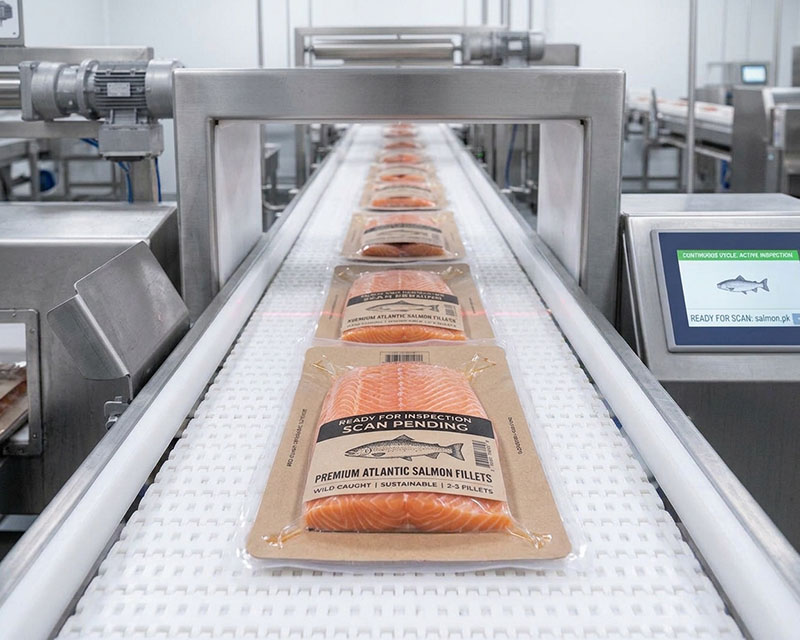
Histom Metal Detector for the Food Industry
Histom's HMD-3010 channel metal detector is designed for food production line inspection. It can be installed after packaging and sealing to inspect finished products for ferrous, non-ferrous, and stainless steel contaminants.
Key Specifications:
| Item | Specification | |
|
Model |
HMD-3010 | |
| Channel width | 300 mm | |
| Channel height |
100 mm |
|
| Conveying capacity | 10 kg per pass | |
| Maximum conveyor speed | 30 m/min | |
| Rejection system | Optional | |
Key Features
● Automatic identification of product characteristics
● Storage of product parameters
● Automatic phase tracking
● Signal processing based on digital chips
● Advanced digital signal processing technology to minimize "product effect"
● Streamlined mechanical design for easy disassembly, cleaning, and maintenance
● Optional reject systems—pusher or flap-style—available to suit specific production requirements
How to Choose a Metal Detector for Vacuum-Packed Food?
Before purchasing a metal detector for the food industry, manufacturers should consider the following factors:
1.Food Characteristics: Evaluate the product’s moisture content, salt content, and temperature.
2.Packaging Material: Identify the packaging material—for example, standard plastic, metallized film, or aluminum foil.
3.Packaging Dimensions: Select an appropriate inspection aperture (opening) size based on the actual dimensions of the product.
4.Production Requirements: Consider the conveyor belt speed, the method of product transport, and the required rejection mechanism.
Learn about Histom’s food metal detectors
Vacuum packaging does not prevent manufacturers from performing metal detection on finished products. The key lies in understanding how food characteristics and packaging materials influence detection performance.
Histom offers a range of metal detection equipment designed for the food industry, suitable for sectors such as meat, seafood, and other food processing applications. The HMD-3010 model can be flexibly configured to meet diverse production requirements, helping manufacturers strengthen their control over metal contamination in packaged products.
Explore Histom's Channel type food Metal Detector to learn more about the equipment and discuss your inspection requirements.
Let's Customized Your Inspection Solution
Every production line is unique. Our experts will help you design a vision inspection system tailored to your products, packaging formats, and quality requirements.


