How to Check the Weight of Powdered Food Packages?
For manufacturers of flour, powdered milk, protein powder, coffee, and seasonings, maintaining consistent package weight is a critical aspect of production quality control. Underweight packaging can result in a product failing to meet its stated net weight, while overweight packaging leads to an unintended "giveaway" of product, thereby driving up raw material costs.
So, how can manufacturers check the weight of powdered food packages efficiently? An automatic checkweigher machine installed on the production line can weigh individual packages, identify weight deviations, and automatically reject products outside the preset limits. For manufacturers in the checkweigher food industry, online weight inspection is an effective way to improve production .
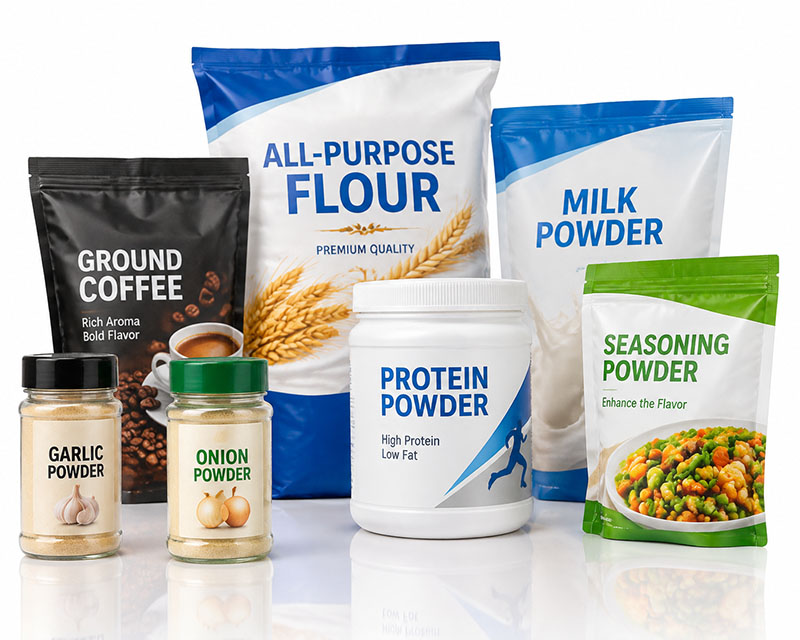
Why Is Weight Control Important for Powdered Food?
Powdered products can present significant challenges during the filling and packaging process. Variations in powder flow characteristics, differences in filling conditions, and diverse packaging methodologies can all lead to discrepancies between individual packaged units.
For instance, on a production line for flour or protein powder, even when identical filling parameters are applied, the final packaged products may still exhibit slight variations in weight.
In the absence of effective weight control measures for powder packaging, manufacturers may encounter two common issues:
Without effective powder packaging weight control, manufacturers may face two common problems:
● Underweight packages: Products that fall below the required weight range may create compliance and customer satisfaction concerns.
● Overweight packages: Excess product in each package increases material consumption and creates unnecessary product giveaway over time.
Manual sampling can help monitor production, but it does not provide continuous weight inspection of every package. This is why many food manufacturers consider an automatic packed food checkweigher for their production lines.
How Does a Checkweigher Inspect Powdered Food Packages?
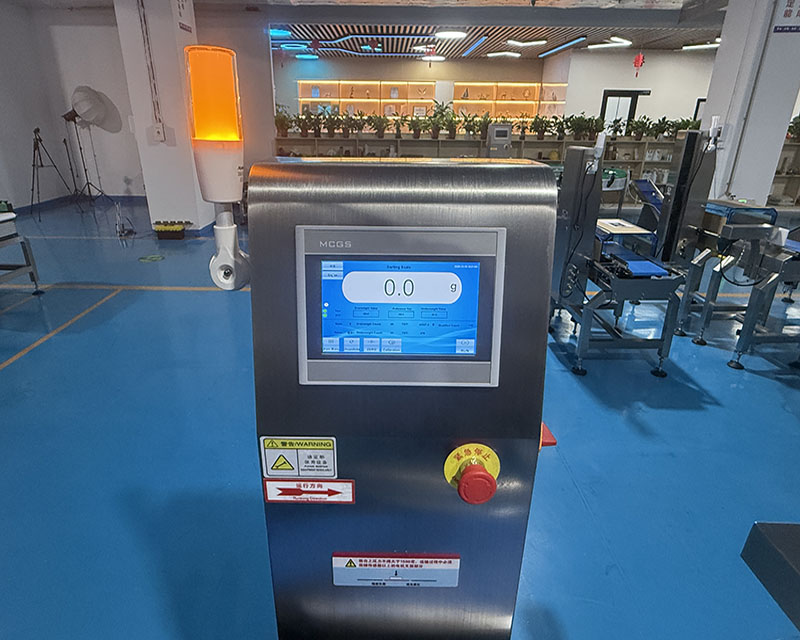
A dynamic checkweigher measures the weight of individual products as they move along a conveyor belt. Each measured weight is compared with the target weight and preset upper and lower tolerance limits.
For powdered food checkweighing, the inspection process generally involves three steps:
● Set the target weight: Operators enter the required product weight and acceptable weight tolerance through the touchscreen.
● Weigh each package: The checkweigher measures individual packages during continuous production.
● Identification and rejection of non-conforming products: Packages with weights falling outside the preset range can be automatically removed via an integrated rejection system.
checkweigher machine can also support product recipe storage and weight data recording, making it easier for operators to manage different packaging specifications and review production weight information.
When Should Powdered Food Packages Be Weighed?
The optimal inspection location depends on the packaging process and the production line layout.
For sachets, vertical form-fill-seal (VFFS) packages, and pre-made pouches, the weighing step can be positioned either after filling or after sealing, depending on the stability of the packaging and the configuration of the production line.
For powdered products in bottles or cans, a checkweigher can be installed after the filling and packaging processes are complete to verify the weight of the finished containers.
In many applications, conducting the inspection after sealing is a practical and effective method for verifying the weight of the finished product. When determining the installation point, manufacturers should also take into account factors such as the risk of powder leakage, the stability of the packaging during transport, and the available space on the conveyor line.
How Can Checkweighing Help Reduce Product Giveaway?
Product giveaway occurs when packages contain more product than their declared target weight. Although a small weight difference may seem insignificant for an individual package, repeated overfilling across a large production volume can increase raw material costs.
In-line checkweighers help manufacturers monitor weight fluctuations and identify packages that fall outside of preset weight ranges.
By analyzing recorded weight data and adjusting filling processes when necessary, production teams can improve weight consistency and reduce avoidable overfilling.
It should be noted that checkweighers cannot automatically adjust filling machines unless the production system is equipped with the appropriate feedback connectivity. Their primary function is to detect package weights and identify deviations.
What Should Manufacturers Consider When Choosing a Checkweigher?
Before purchasing a checkweigher machine for the food industry, manufacturers should evaluate several factors:
● Product Weight Range: Ensure the equipment can support the weight of the products being packaged; verify the maximum weighing capacity of the checkweigher.
● Packaging Dimensions: The dimensions of the conveyor system must align with the actual size of your packaging and be suitable for your specific product dimensions.
● Accuracy Requirements: Depending on the configuration and application, checkweighers can achieve an accuracy of up to ±0.1 g; however, the required precision should be determined based on factors such as the production environment.
● Production Speed: Confirm that the equipment’s processing capacity meets your actual packaging throughput requirements (units per minute).
● Rejection Method: Select an appropriate rejection system based on the dimensions, weight, and shape of the packaging, as well as the specific conditions of your production line.
Choosing a Checkweigher for Your Powder Packaging Line
Whether you are producing flour, protein powder, coffee powder, milk powder, or seasonings, selecting the right checkweigher machine considering your packaging format, target weight, production speed, and the required level of weighing accuracy.
Explore Histom's Dynamic Checkweigher to learn more about online weight inspection, automatic rejection, and customized configurations.
You can also visit our Powder Food Inspection Solutions page to explore inspection applications for powdered food products.
Contact Histom with your product type, package dimensions, target weight, and production speed to discuss a suitable checkweighing solution.
Let's Customized Your Inspection Solution
Every production line is unique. Our experts will help you design a vision inspection system tailored to your products, packaging formats, and quality requirements.


