What Is the Difference Between Ferrous and Non-Ferrous Metal Detection?
Metal contamination is a common issue in food processing. During production, metal fragments—originating from the wear and tear of machinery, cutting tools, and conveying equipment, or present within raw materials—can find their way into food products. However, not all metals behave the same way when subjected to detection.
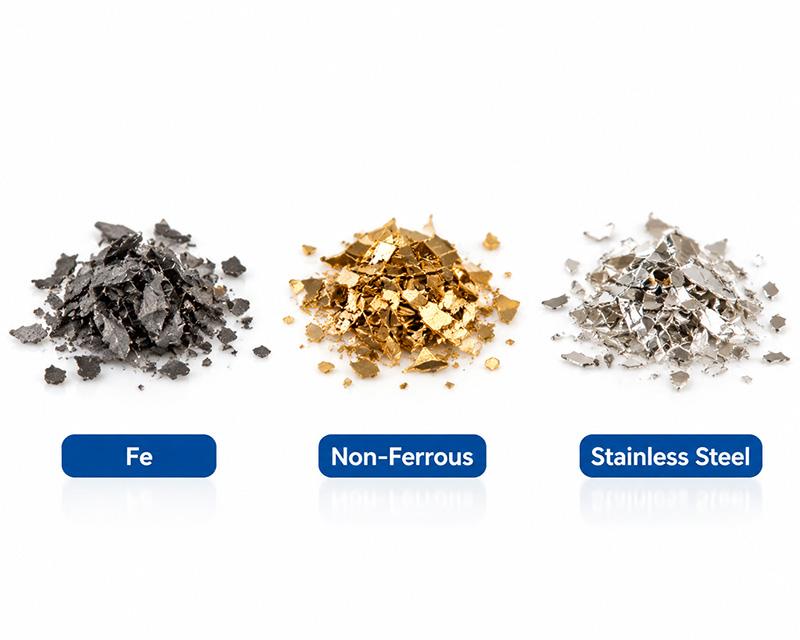
The main difference between ferrous metal detection and non-ferrous metal detection is the magnetic and electrical properties of the metal. Ferrous metals, such as iron and carbon steel, are magnetic and conductive, while non-ferrous metals, such as aluminum and copper, are generally non-magnetic but conductive. Stainless steel is commonly treated as a separate detection category because some grades, including SUS304, can be more difficult to detect.
Understanding these differences helps food manufacturers select suitable metal detectors for food production lines.
What Are Ferrous and Non-Ferrous Metals?
In food production environments, metal contaminants can be categorized into two fundamental groups: ferrous and non-ferrous metals.
1. Ferrous Metals
Ferrous metals contain iron and are typically magnetic. Common examples include iron and carbon steel.
Such contaminants may originate from worn processing equipment, loose machine components, cutting tools, screws, or parts of conveyor systems. Because ferrous metals are both magnetic and electrically conductive, they are generally easier for conventional food metal detection equipment to identify.
2. Non-Ferrous Metals
Non-ferrous metals do not contain iron as a primary component and are typically non-magnetic. Common examples include aluminum, copper, and brass.
Although these metals are non-magnetic, they are electrically conductive, which allows them to disrupt the electromagnetic field of food metal detection equipment. Their detection characteristics differ from those of ferrous metals.
Why Is Stainless Steel More Difficult to Detect?
Stainless steel is an important category in ferrous and non-ferrous metal detection applications.
Unlike iron and carbon steel, many grades of stainless steel exhibit relatively low magnetic permeability and electrical conductivity. This is particularly true for austenitic stainless steels—such as SUS304, which is commonly used in food processing equipment.
Consequently, stainless steel fragments typically generate weaker detection signals compared to iron contaminants of the same size. Furthermore, their detectability is influenced by factors such as the material grade, processing history, and the shape and orientation of the fragments.
For food manufacturers, this means that screening solely for ferrous contaminants is insufficient; detection protocols must also encompass non-ferrous metals and stainless steel.
How Does a Food Metal Detector Identify Different Metals?
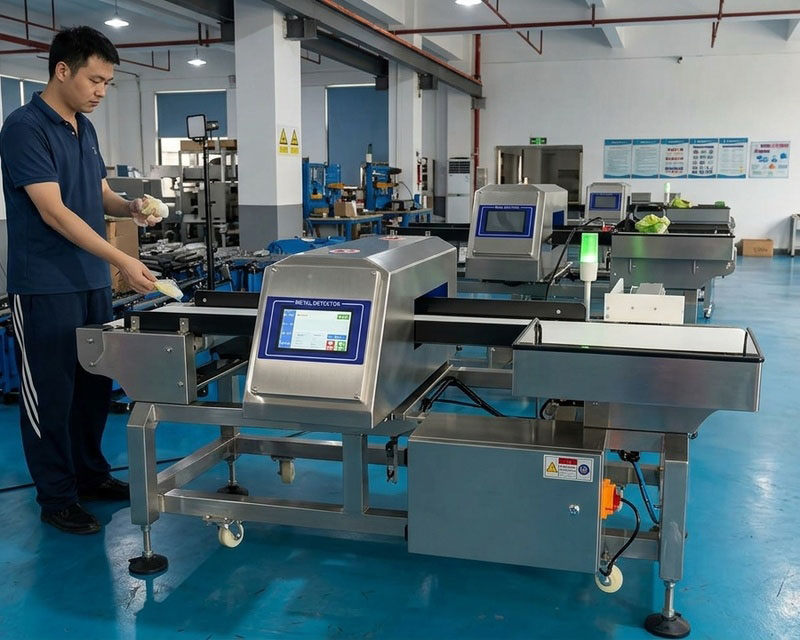
An industrial metal detector for food uses an electromagnetic field to inspect products passing through its detection aperture.
When a metal contaminant enters the detection zone, it disrupts the electromagnetic field and generates a signal. The system’s electronic components analyze this signal; once a contaminant is confirmed, the system triggers an alarm or activates a pre-configured rejection mechanism.
Modern detection systems utilize features such as multiple detection frequencies, phase tracking, and product self-learning to optimize signal analysis and effectively mitigate interference caused by the inherent characteristics of the product itself—a phenomenon known as the "product effect."
These technologies are particularly effective when inspecting food products that vary in terms of moisture content, salt concentration, or other specific attributes.
What Factors Affect Metal Detection Sensitivity?
The actual sensitivity of non ferrous metal detection and ferrous metal detection depends on more than the metal type.
The following factors should be taken into account:
● Product characteristics: Factors such as moisture content, salt content, and low temperature can interfere with the detection process.
● Metal size and shape: Small fragments, thin wires, and irregularly shaped pieces of metal may generate different signals.
● Contaminant orientation: The detection result may vary depending on the orientation of a metal wire as it passes through the detection aperture.
● Aperture size: Larger detection apertures make it more difficult to achieve the same level of detection sensitivity.
● Packaging materials: Metalized films and aluminum foil packaging can interfere with conventional metal detection; such cases require application-specific testing, or the use of specialized metal detectors designed for foil-packaged products, or X-ray inspection systems.
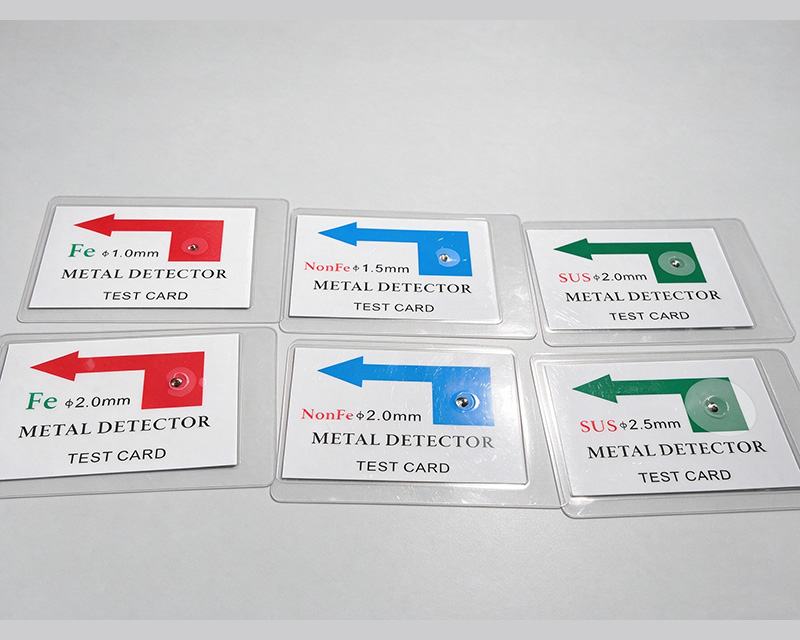
Therefore, the best approach is to verify detection sensitivity under actual operating conditions, using representative products and metal test samples.
Can One Food Metal Detector Detect Ferrous, Non-Ferrous and Stainless Steel?
Yes. A suitably configured food metal detector can be designed to identify all three categories: Fe, Non-Fe and SUS304 stainless steel.
For example, conveyor metal detectors can be used to inspect packaged items such as bread, meat products, nuts, frozen foods, powdered food products, and bagged snacks. Depending on the production layout, the metal detection process can also be integrated into earlier stages of production to inspect unpackaged products.
When metal is detected, the system can trigger an audible and visual alarm or activate an automatic rejection mechanism to remove the affected product from the production line.
The key is to select the appropriate metal detector based on the specific product, packaging format, aperture size, and production speed.
How to Choose a Suitable Metal Detector for the Food Industry?
When evaluating metal detectors for use in the food industry, manufacturers should carefully weigh detection performance against their specific production requirements.
For reference, the metal detector for packaged food products from Histom features the following specifications:
● Ferrous (Fe) sensitivity: Ø1.2 mm
● Non-ferrous metal sensitivity: Ø2.0 mm
● SUS304 (stainless steel) sensitivity: Ø2.0 mm (this specification requires further confirmation)
● Detection aperture dimensions: 220 mm (width) × 100 mm (height)
● Conveyor belt speed: 30 m/min
The system supports multi-frequency detection, phase tracking, product learning and product parameter storage. Different aperture dimensions, conveyor speeds and rejection methods can also be configured according to application requirements.
For more information, explore the [Metal Detector for Packaged Food] to learn about its features and applications.
Choosing an experienced food metal detector manufacturer also helps ensure that the equipment is evaluated against actual product samples and production conditions before installation.
Let's Customized Your Inspection Solution
Every production line is unique. Our experts will help you design a vision inspection system tailored to your products, packaging formats, and quality requirements.


