Why Is Bottle Orientation Important for Automatic Labeling?
In an automated bottling production line, precise labeling depends not only on the labeling machine itself but also on ensuring that each bottle is correctly positioned when it reaches the labeling station.
When bottles move along a conveyor belt in inconsistent orientations, existing markings, handles, embossed patterns, or designated spaces for labels may not be facing in the proper direction. This can result in labels being applied in the wrong position, an inconsistent product appearance, and increased waste within the production process.
bottle orientation machine helps solve this problem by identifying the position of each bottle and automatically rotating it into a consistent direction before it reaches the labeling station.
Why Does Bottle Orientation Matter Before Automatic Labeling?
Not all bottles are suitable for labeling in just any orientation. For containers with a distinct front and back, ensuring consistent orientation is essential for achieving precise label placement and maintaining a professional product appearance.
1. Misaligned Label Placement
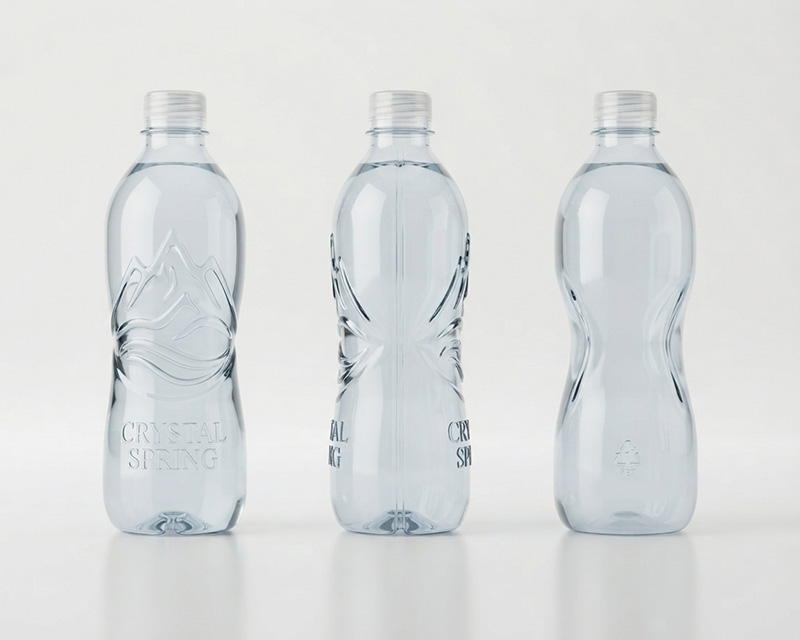
If bottles enter the labeling machine with inconsistent orientations, labels may be applied in the wrong position, appear crooked, or even cover up embossed logos or decorative patterns on the container. This not only compromises labeling quality but also detracts from the product's overall aesthetic.
2. Inaccurate Placement of Printed Codes or Information
Production dates, batch numbers, and other product information often need to be printed in specific locations. If bottle orientation is not uniform, codes applied via inkjet or laser technology might end up on dark-colored areas, curved surfaces, or other unsuitable spots, making the information difficult to read.
3. Inconsistent Product Presentation
For rectangular bottles, containers with flat sides, or those with an asymmetrical design, there is typically a clear "front" orientation. If bottles are not oriented consistently, they will face different directions when packed into cases or placed on retail shelves, which diminishes the visual uniformity of the product.
4. High Labor Costs and Production Bottlenecks
Manually turning bottles before labeling requires additional workers and may become unreliable as line speed increases. An automatic bottle orienter reduces the need for manual adjustment and supports more consistent bottle positioning.
How Does an Automatic Bottle Orientation Machine Work?
Automated bottle orientation equipment typically integrates industrial cameras, image processing systems, control systems, and mechanical rotating mechanisms.
First, bottles enter the inspection area via a conveyor belt. Industrial cameras capture images of each bottle, from which a visual recognition system extracts specific features—such as trademarks, handles, embossed patterns, or other identifiable markings.
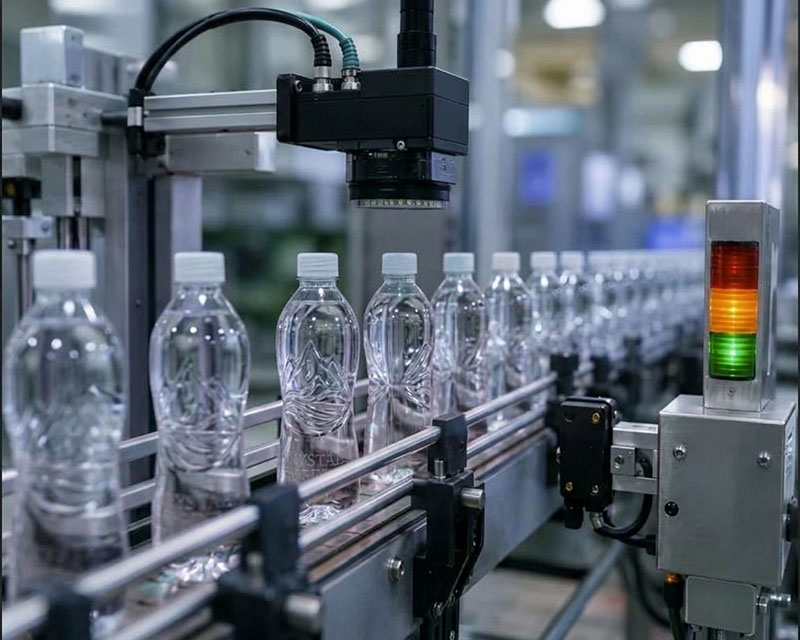
The system then determines the bottle's current orientation and compares it against a pre-set, ideal orientation. If a misalignment is detected, the control system activates a mechanical rotating mechanism to adjust the bottle to the required front-facing orientation.
Once oriented, the bottles continue along the production line to subsequent stations—such as automatic labeling machines, coding systems, or packaging equipment—for further processing.
This application of automated visual inspection technology allows bottle positioning to be handled automatically rather than relying on manual visual checks.
Learn more about our Vision-Based Bottle Orientation Machine and how it helps align bottles before labeling and other downstream processes.
Which Bottles Need Automatic Orientation?
Automatic orientation is essential for containers that have specific directional requirements, or that need to be labeled or marked at a precise, fixed position.
Common use cases include:
● PET bottles: Beverage bottles featuring printed designs, logos, or designated spaces for labeling.
● Glass bottles: Food and beverage containers that must maintain a consistent forward-facing orientation.
● Plastic bottles: Packaging for sauces, condiments, and personal care products.
● Rectangular and flat-shaped bottles: Containers with clearly defined front and back sides.
● Polygonal and asymmetrical bottles: Containers with irregular shapes—such as those with handles, embossed designs, or non-uniform forms.
The choice of orientation method depends on the bottle's shape, material, and identifiable features, as well as the specific requirements of the production process.
Where Should a Bottle Orientation Machine Be Installed?
In most applications, bottle orientation equipment is typically installed after the filling and capping stages, but before labeling or coding equipment.
This configuration ensures that bottles are correctly oriented and aligned before they proceed to the next stage of the production process.
For example, a production line workflow might look like this:
Filling → Capping → Bottle Orientation → Labeling → Coding → Packaging
By incorporating an orientation system prior to the labeling process, manufacturers can reduce the risk of misaligned labels and ensure a consistent appearance for the product throughout the entire packaging process.
How Can You Choose the Right Bottle Orienter?
Selecting the right container orientation system involves far more than just considering machine operating speed. Manufacturers must comprehensively evaluate several practical factors:
● Container Size and Shape: This includes diameter, height, surface features, the presence of handles, and overall geometric structure.
● Identification Requirements: The system must be capable of reliably identifying the specific features that define the front orientation of a container.
● Production Speed: The orientation system must align with the actual throughput requirements of the production line.
● Mechanical Handling: Gripping and rotating components must be able to secure the container firmly without causing damage or scratches to its surface.
● Line Integration: Considerations include the machine’s dimensions, conveyor height, and its connectivity with upstream and downstream processing equipment.
For manufacturers handling multiple container specifications, a system that can store configurations—or "recipes"—and automatically adjust its mechanical components will significantly streamline the product changeover process.
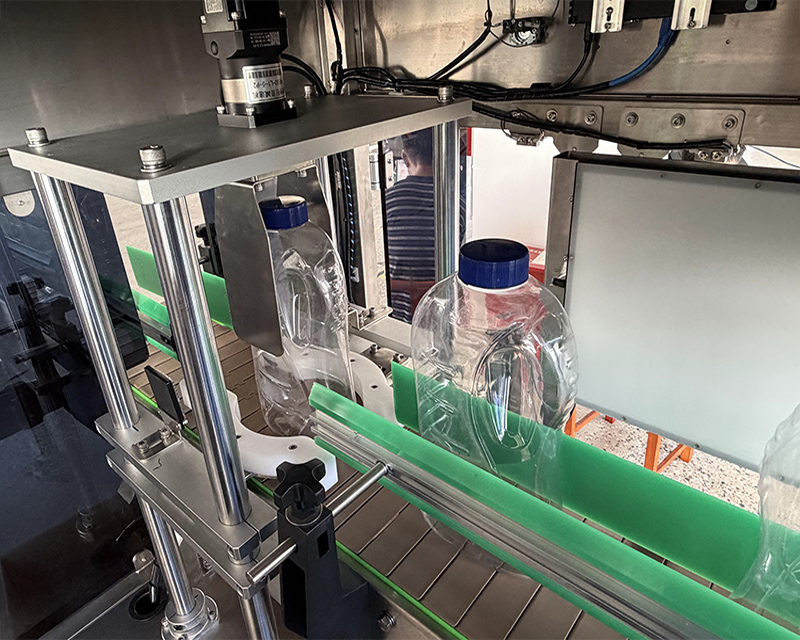
HISTOM’s machine vision-based container orientation system combines industrial camera recognition technology with an automated mechanical rotation mechanism, ensuring that containers are precisely oriented before moving on to subsequent processes. The system offers flexible configuration, making it adaptable to a wide variety of container shapes, materials, and production line layouts.
If you are looking to optimize the positioning of your containers—for instance, prior to labeling—please contact HISTOM. We would be happy to discuss your specific container samples and production requirements with you.
Let's Customized Your Inspection Solution
Every production line is unique. Our experts will help you design a vision inspection system tailored to your products, packaging formats, and quality requirements.


