Why Metal Detection Is Important in Food Processing
Metal contamination is one of the potential risks that food manufacturers need to control throughout the production process. Metal fragments can accidentally enter food products from raw materials, processing equipment, packaging materials, or damaged machine components.
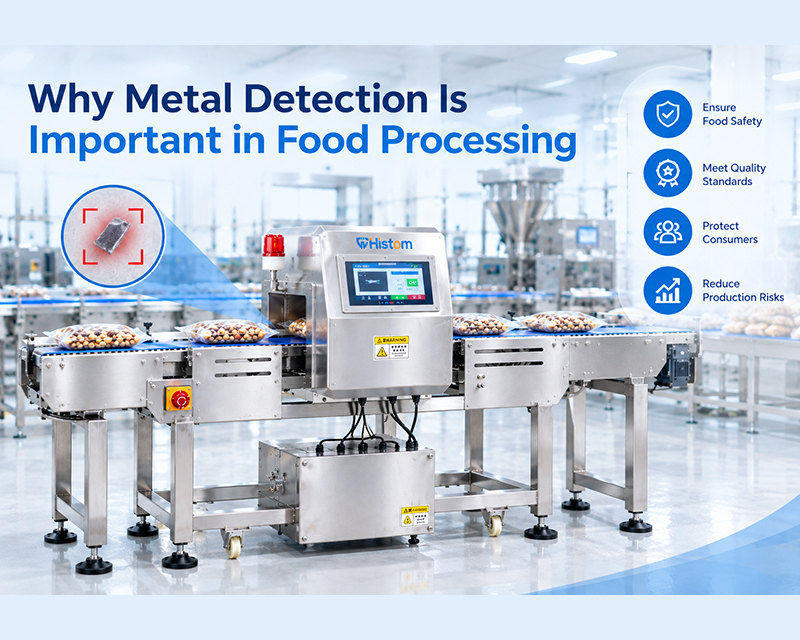
For this reason, metal detection in food processing has become an important part of modern food safety and quality control systems. A properly configured food metal detector can help manufacturers identify contaminated products and automatically remove them from the production line before they reach consumers.
What Is Metal Detection in Food Processing?
Metal detection is an inspection method used to identify metallic contaminants inside or on the surface of food products.
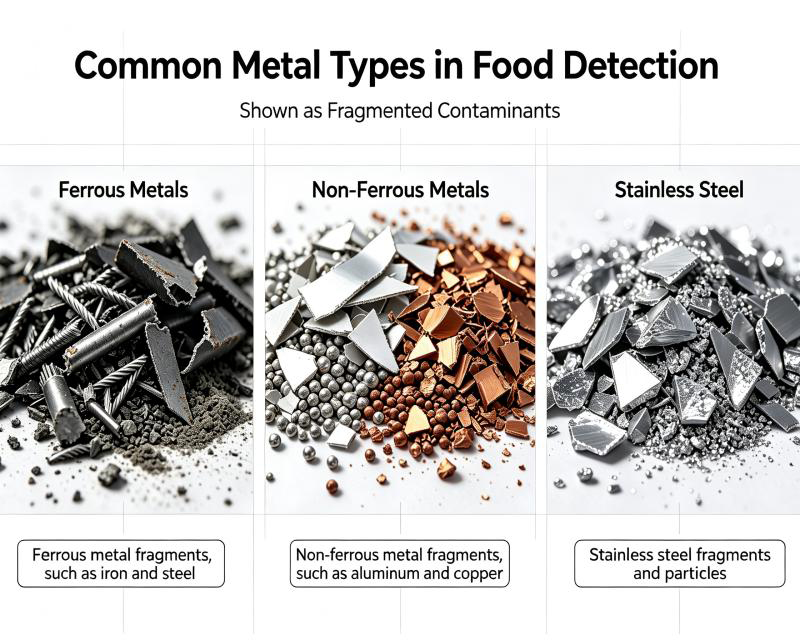
A typical food metal detection system uses an electromagnetic field to detect changes caused by conductive metal contaminants. Depending on the equipment and application, food metal detectors can detect common types of metal, including:
● Ferrous metals such as iron and steel
● Non-ferrous metals such as aluminum and copper
● Stainless steel
When a metal contaminant is detected, the system can trigger an alarm and activate an automatic rejection device to remove the affected product from the production line.
Why Is Metal Detection Important for Food Processing?
1. Helps Protect Food Safety
The primary purpose of a food processing metal detector is to help prevent metal-contaminated products from reaching consumers.
Metal fragments may cause injuries or create serious food safety concerns. By inspecting products at appropriate points in the production process, manufacturers can establish an additional control step for detecting metallic contamination.
For food processors, metal detection is therefore not simply an equipment upgrade. It is an important part of an overall food safety management strategy.
2. Helps Detect Metal From Processing Equipment
Food production lines contain many machines with moving components. Over time, equipment parts can wear, break, or become damaged.
For example, contamination may originate from:
● Cutting and slicing equipment
● Mixers and blenders
● Conveyors
● Pumps
● Filling machines
● Packaging machines
● Other processing equipment
A metal detector for food processing can help identify metallic contamination that may occur during production, providing manufacturers with an additional layer of quality control.
3. Protects Product Quality and Brand Reputation
Food safety problems can have a significant impact on a manufacturer's reputation.
A contaminated product may result in customer complaints, product returns, recalls, production interruptions, and financial losses. In addition, repeated quality problems can reduce customer confidence in a food brand.
Installing a reliable metal detection system can help manufacturers identify contaminated products before shipment and reduce the risk of defective products reaching customers.
Supports Quality Control on Production Lines
Modern food manufacturers often operate high-speed production lines where manually inspecting every product is impractical.
An automatic industrial food metal detector can inspect products continuously while they move through the production line. When a contaminated product is identified, an automatic reject system can remove it without stopping the entire production process.
This makes metal detection suitable for many food processing and packaging applications, including:
● Meat and poultry
● Bakery products
● Snacks
● Frozen foods
● Dairy products
● Pet food
● Grains and cereals
● Sauces and prepared foods
● Packaged foods
Helps Manufacturers Establish Critical Inspection Points
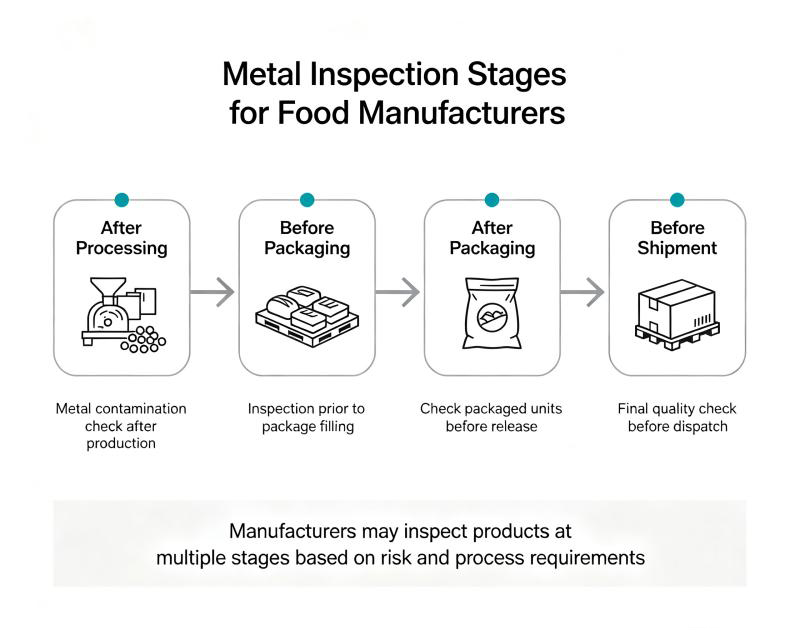
Metal detectors can be installed at different stages of food production depending on the production process and contamination risks.
For example, a manufacturer may choose to inspect products:
After processing → Before packaging → After packaging → Before shipment
The ideal inspection location depends on the product characteristics, packaging material, production speed, and potential contamination sources.
For some production lines, installing metal detection after the final packaging stage can provide an additional inspection step before finished products leave the factory.
Conclusion
Metal detection plays an important role in modern food processing because it helps manufacturers identify metallic contaminants before affected products reach consumers.
From raw material processing to final packaging, a properly configured food metal detector can support food safety, quality control, production efficiency, and brand protection.
As food production lines become increasingly automated, integrating reliable inspection equipment into the production process can help manufacturers build a more consistent and controllable food safety system.
Let's Customized Your Inspection Solution
Every production line is unique. Our experts will help you design a vision inspection system tailored to your products, packaging formats, and quality requirements.


