What Foreign Objects Can X-Ray Inspection Detect in Food?
Foreign objects in food products can enter the production process through raw materials, processing equipment, packaging materials, or handling operations. Detecting these contaminants before products reach consumers is an important part of modern food safety and quality control.
A food X-ray inspection machine provides an automated solution for detecting many types of dense foreign objects inside packaged and unpackaged food products. Unlike conventional metal detection, X-ray inspection can identify not only metal contaminants but also other high-density materials such as glass and stones.
Understanding what an X-ray inspection system for food can detect can help manufacturers select the right inspection technology for their production lines.
What Is a Food X-Ray Inspection Machine?
A food X-ray inspection machine uses X-ray technology to examine food products as they pass through an inspection area. Differences in density and X-ray absorption allow the system to identify foreign objects within the product or packaging.
When a foreign object is detected, the system can display the contaminated product and activate an automatic rejection device to remove it from the production line.
Food X-ray inspection systems can be integrated into automated production lines and are commonly used for packaged foods, bottled products, bulk foods, and other food processing
What Foreign Objects Can X-Ray Inspection Detect?
1. Metal Contaminants
Metal is one of the most common foreign objects that food manufacturers need to control.
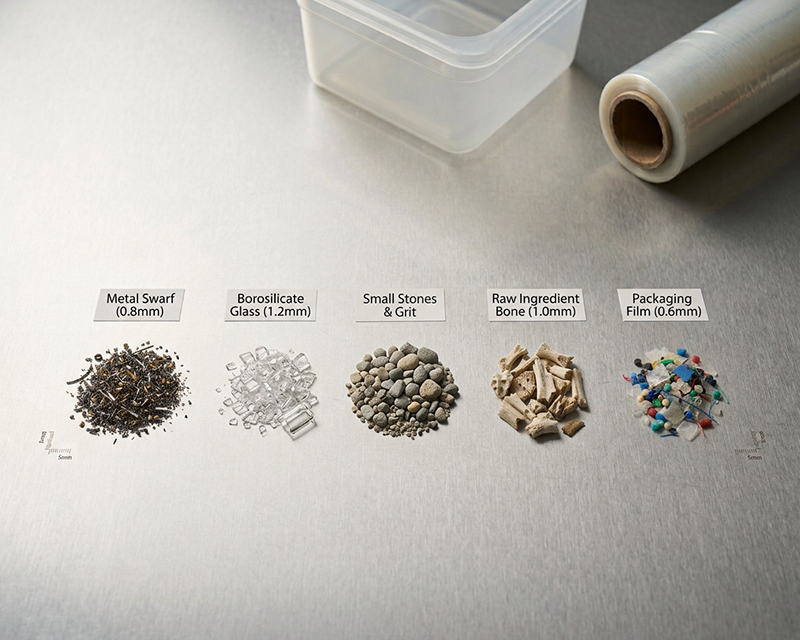
An X-ray inspection system can detect many metallic contaminants, including:
● Iron and steel fragments
● Stainless steel
● Aluminum
● Metal wires
● Metal pieces from damaged equipment
Metal fragments can originate from cutting blades, screws, machine components, conveyor systems, or other processing equipment.
Although metal detectors are specifically designed for metallic contamination, an X-ray foreign object detector can provide broader foreign-object inspection by detecting metal together with other dense contaminants.
2. Glass
Glass fragments can present a significant contamination risk, particularly when food is processed or packaged in glass containers.
Broken bottles, damaged containers, or glass components can potentially introduce fragments into food products.
Because glass has a relatively high density compared with many food products, Side-Illuminated X-Ray Inspection can detect glass fragments inside suitable products and packages.
This makes X-ray inspection particularly useful for food manufacturers handling bottled, jarred, or glass-packaged products.
3. Stones and Rocks
Raw agricultural materials may contain stones or other mineral materials before they enter the production process.
Products such as grains, nuts, seeds, dried fruits, and other bulk food materials may require foreign-object inspection after harvesting and processing.
A Bulk Food Material X-ray Inspection system can identify dense stones and similar foreign materials that may be difficult to detect through conventional visual inspection.
4. Dense Plastic
Certain high-density plastics can also be detected by X-ray inspection, depending on their density, size, shape, product background, and inspection conditions.
This can be useful when manufacturers need to control foreign objects that are not metallic.
However, not every type of plastic can be detected equally well. Detection performance depends on the difference in density between the foreign object and the surrounding food product.
5. Bones
Bone fragments can be a potential foreign-object risk in meat and poultry products.
Depending on the product and bone characteristics, an X-ray food inspection machine can detect bone fragments based on their density differences from the surrounding product.
This provides an additional inspection method for meat and poultry processing lines.
Why Is X-Ray Inspection Important for Food Production?
Traditional visual inspection cannot reliably identify small foreign objects hidden inside packaged or processed food products.
An X-ray inspection system can inspect the internal contents of products without opening the packaging. This allows manufacturers to perform non-destructive inspection while maintaining normal production.
The system can also continuously inspect products on automated production lines and automatically reject products that do not meet predefined inspection requirements.
This makes X-ray inspection an important technology for modern food safety inspection and foreign-object control.
Where Are Food X-Ray Inspection Systems Used?
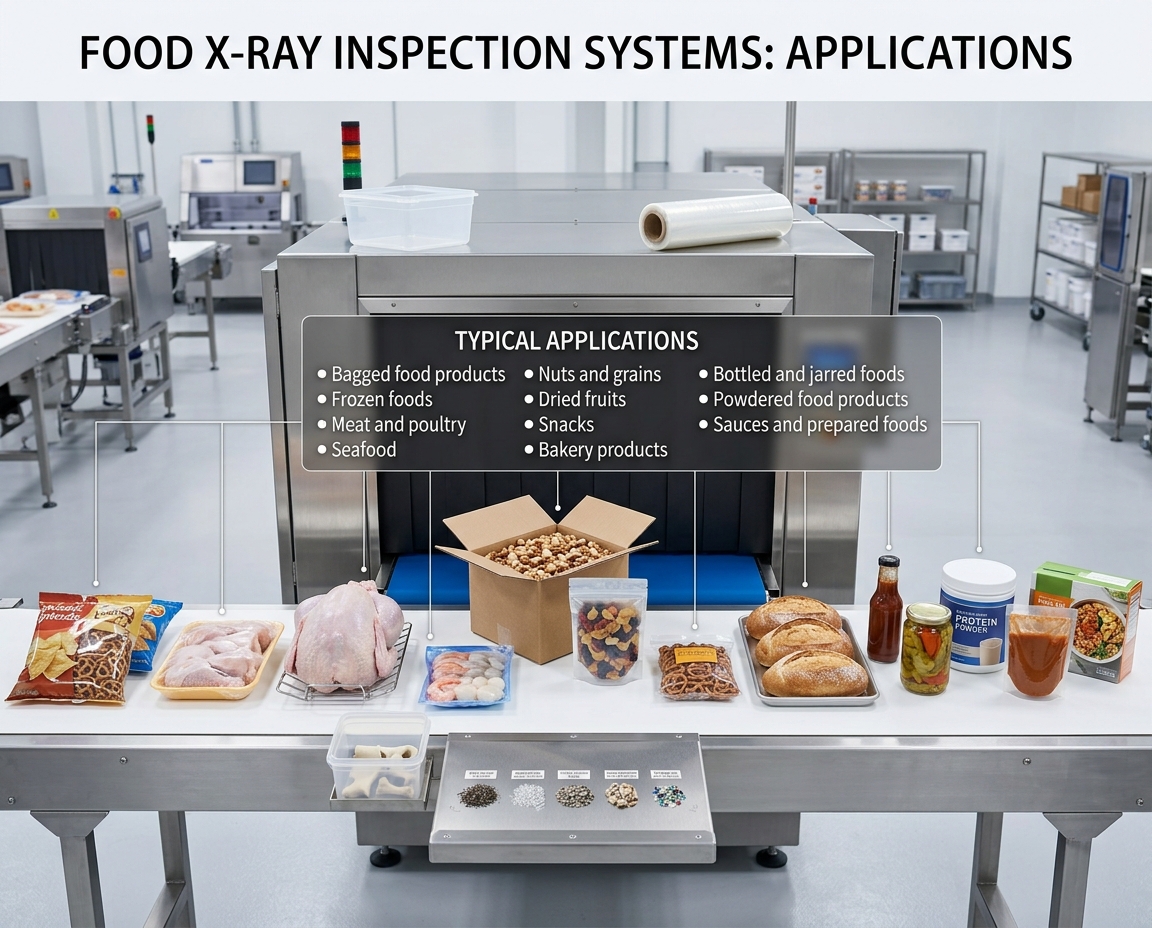
Food X-ray inspection systems can be used across a wide range of food processing and packaging applications.
Typical applications include:
● Bagged food products
● Frozen foods
● Meat and poultry
● Seafood
● Nuts and grains
● Dried fruits
● Snacks
● Bakery products
● Bottled and jarred foods
● Powdered food products
● Sauces and prepared foods
For bulk food products, X-ray inspection can help identify dense foreign objects mixed with raw or processed materials.
For packaged products, the system can inspect the contents without opening the package, making it suitable for final product quality control.
How Does Automatic Rejection Work?
When the food X-ray inspection machine identifies a suspected foreign object, the system can send a signal to an automatic rejection mechanism.
Depending on the product and production line, different rejection methods may be used, including air blast, pusher, flap, or other customized mechanisms.
The rejected product can then be separated from qualified products for further investigation.
This combination of X-ray inspection and automatic rejection allows manufacturers to create a continuous foreign-object detection process without relying entirely on manual inspection.
Conclusion
A food X-ray inspection machine can detect a wide range of dense foreign objects, including metal, glass, stones, certain dense plastics, and bone fragments.
By inspecting products without opening their packaging, an X-ray inspection system for food can provide continuous and non-destructive foreign-object detection throughout food production and packaging processes.
For manufacturers dealing with complex foreign-object risks or products that are difficult to inspect using conventional metal detection, X-ray technology can provide an additional layer of food safety and quality control.
Let's Customized Your Inspection Solution
Every production line is unique. Our experts will help you design a vision inspection system tailored to your products, packaging formats, and quality requirements.


